BUILD FASTER, EARN MORE
How a Five-Person Team Built the Go-To Streaming App on Meta Quest
BeamXR Live hit one million minutes viewed in 12 weeks and now generates 300,000 minutes viewed per day — all built by a team of five.
This developer story is part of our Build Faster, Earn More series featuring practical playbooks on how to deploy the latest tools and grow with your audience on Meta Quest.
 If you can spot a problem that people are struggling with in VR and you create a solution — no matter how simple — people will flock to it.
Rory Clark
Lead Developer, BeamXR
BeamXR Live is a live-streaming app for Meta Quest that lets anyone broadcast their VR or mixed reality experience to Twitch, YouTube, and other platforms directly from their headset, without a capture card, PC, or extra setup. Users can add custom overlays, interact with live chat, and clip highlights, all from Quest itself.
BeamXR Live streams now generate roughly 300,000 minutes viewed per day.
Since launch, it's become the go-to streaming app on Quest, hitting one million minutes viewed in its first 12 weeks, earning a stellar Store on Meta Quest rating, and building a growing subscription business through word of mouth.
Below, we dig into how they built it: the technical pivot that set their quality bar, the freemium strategy that grew their user base, and the lessons other developers can take away.
The Gap Nobody Was Filling
In 2022, streaming from a VR headset was either expensive, unreliable, or required workarounds most users couldn't figure out. Paul Miller, CEO of BeamXR, kept hearing the same thing from developers: they wanted streaming capabilities in their apps, but didn't have the time or resources to build them.
"We spoke to a lot of people who thought it was a fantastic idea," Miller says. "A good number had started on the journey of creating some kind of streaming application, but it was away from their day job. For us, it's about specializing in the streaming and making sure it's the highest quality."
Stream to Twitch or YouTube with custom overlays, live chat, and clipping built right into the headset experience.
Miller assembled a small team of five, including Rory Clark as lead developer. Clark brought years of VR development experience, including work on hand tracking and spatial interaction, along with a doctoral research background in VR.
Together, they set out to break down the barrier of the headset and let people share what they're experiencing seamlessly. Weeks into development, they hit their first defining technical choice.
The Pivot to Hardware Encoding
When BeamXR started building for Quest, they initially used software encoding. Three to four weeks in, the studio made a critical pivot to hardware encoding.
"Both the quality and the performance massively improved for us," Clark says. "As soon as we hit hardware encoding, we were able to do essentially higher quality than you would get through the native recording, but streaming."
That decision gave BeamXR Live streaming quality that, according to Clark, approaches or exceeds what Quest captures through native recording, while keeping performance overhead low enough to run alongside demanding titles. The team set a high bar from day one: if you're streaming a game, the video has to be flawless, on time, and faithful to what you're playing.
"If you're streaming a game, it can't just be good enough," Miller says. "It can't be glitching here and there. That video stream has got to be on time, and it's got to represent what you're playing."
Building with Meta Developer Tools
Clark used the Android emulator in early development, since the Meta Spatial Simulator hadn't been released yet. As the platform tooling improved, the team adopted the Meta Spatial Simulator for faster iteration, and Clark now uses Meta Quest Developer Hub and the Developer Dashboard daily.
To ensure their app met all Store requirements and correctly implemented the billing and subscription APIs, Clark connected the latest Meta AI tools to his development environment.
Recent advances now enable developers to integrate AI tools directly into their workflow, where it can reference Meta's platform documentation, flag issues with API implementation, and answer questions about Quest-specific requirements in context. Clark's team now uses this AI-assisted workflow as a regular part of their development process, and other developers can set it up through the Meta AI Tools documentation.
Finding the Right Freemium Model
BeamXR Live launched as a free app because the team wanted to get the streaming experience right before introducing premium features.
"We had a good idea of the demand, but we wanted to understand how people actually used the app before we started to charge for things," Miller says. "For us, it was important to get that right first."
As BeamXR Live's user base grew, the team started asking: what would add value beyond the core streaming experience?
The team's active community played an important role in shaping the product roadmap. Through ongoing conversations with users, the team learned that streamers wanted more tools to build their brand identity on Quest, specifically customizable stream overlays and live-stream clipping for on-demand video. These became the foundation of BeamXR Live's premium tier.
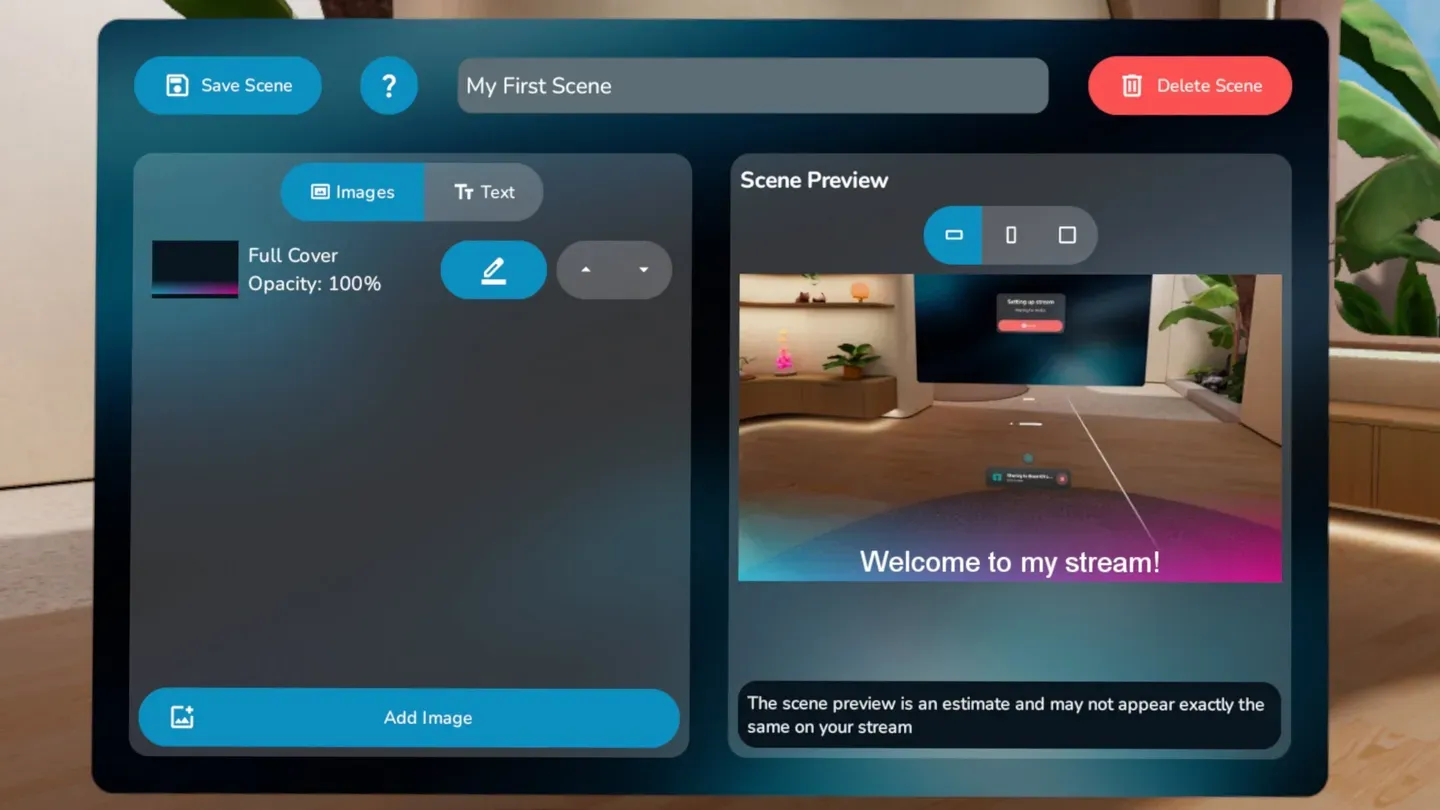
Paid subscription tiers enable users to add custom overlays and build their brand identity.
The subscription model is now performing according to the team's projections. "They're good early signs for growing a really successful business," Miller says.
Organic Growth That Compounds
BeamXR Live has grown entirely through word of mouth, social sharing, and a few smart product decisions. The free tier includes a BeamXR watermark on streams, which helps new users discover the app.
"People are getting a high-quality streaming product for free," Clark says, "and the watermark helps other Quest users find us when they see a great stream." For streamers who want a clean, fully branded look, removing the watermark is one of the premium subscription features.
The app's stellar rating on the Store has also been a growth driver. "That's been a critical focus from the start," Miller says. "We think it's driving a lot of people to the app and giving confidence that when they download it, they're going to get a good experience."
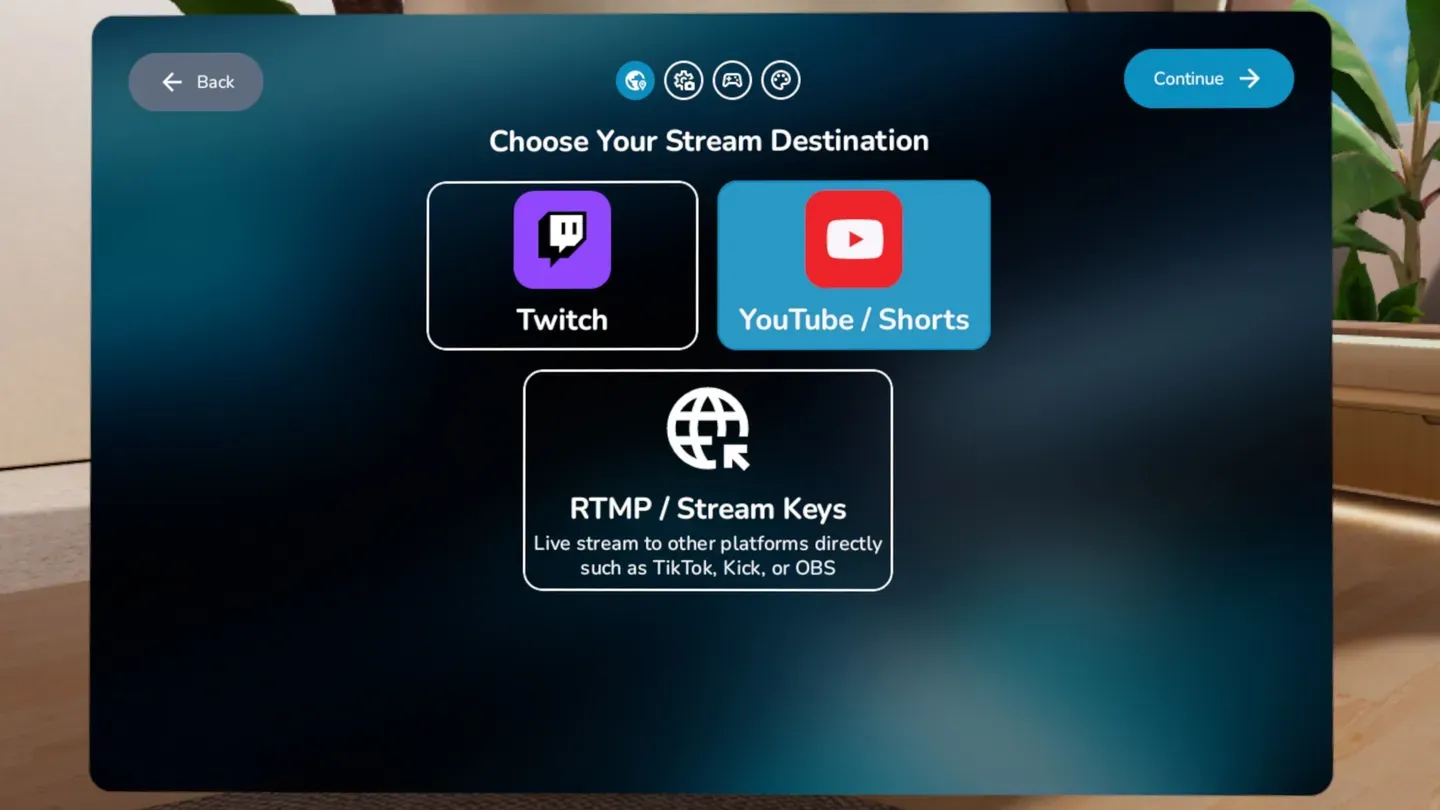
BeamXR Live has earned its Store rating in part because users can start streaming with a single tap.
These good experiences are fueling a remarkable story: after reaching one million minutes viewed in just 12 weeks after launch, today it's routine for BeamXR Live to reach 300,000 minutes viewed in a single day.
Users Building Audiences on Quest
For Clark and Miller, the most rewarding feedback comes from streamers who are growing dedicated audiences through the app.
"We've seen users who were completely new to streaming pick up the app and build dedicated audiences within their first couple of months," Clark says. "Some have grown to several hundred followers on their chosen platform, which is exciting to see. The low barrier to entry means anyone with something interesting to share can get started right away."
Some use cases have truly surprised the team. One streamer takes their Quest headset into wetlands and streams biology lessons in mixed reality, using passthrough to show the physical environment alongside digital overlays and even a microscope feed. "We were not expecting anyone to do this," Clark says.
The stream blends the real-world field environment with educational graphics, creating a learning experience that would be impossible without the combination of mixed reality and live streaming.
Other streamers have built dedicated followings thanks in part to the high production quality that previously required expensive capture equipment or complicated multi-device setups. Now, these users can seamlessly broadcast VR gameplay with professional overlays, custom branding, and live chat integration.
What's Next: Enterprise, AI, and New Form Factors
Beyond consumer streaming, BeamXR is building an enterprise business through their developer SDK. Corporate training teams can embed BeamXR's streaming technology directly into their training platforms, giving educators a live window into what each learner sees during a session. For companies running training programs at scale, that visibility helps turn VR from an isolated experience into an observable (and coachable) one.
The team is also exploring how AI can improve the streaming workflow itself, from helping users identify their strongest content to shortening the path from live session to published clip.
Looking further ahead, they see potential in the glasses form factor. "Our underlying technology would work with AI glasses," Miller says. "As the growth of that technology continues, I think there will be opportunities there for us."
What You Can Learn: 6 Takeaways
1. Look for a gap no one is filling: On Quest, unmet needs drive organic discovery. Just a few years ago, streaming from a VR headset wasn't consistently feasible for most developers or consumers. BeamXR built a straightforward solution that didn't exist, and users organically discovered BeamXR Live. Takeaway: Browse the Store and look for workflows that are painful or missing entirely. That gap is your opening. 2. Launch free, learn fast, then monetize what users value.BeamXR Live launched as a free app so the team could understand how people used it before monetizing. When their community consistently asked for custom overlays and stream clipping, those became the premium tier. Takeaway: Let usage data and community feedback guide what you charge for. BeamXR didn't guess; they listened to their audience. 3. Your Store rating is a growth engine. Protect it from day one.BeamXR Live's stellar Store rating has been a consistent driver of new downloads. Miller calls it "a critical focus from the start," giving new users confidence that the app delivers a quality experience. Takeaway: Ratings compound: higher rating leads to more downloads, more satisfied users, and more positive reviews. 4. A small, focused team can own a category. BeamXR built Quest's leading streaming app with five people. A smaller team means faster iteration, tighter feedback loops, and the agility to pivot quickly when something isn't working. Takeaway: Five people built the category-defining streaming app on Quest. Scale your ambition to your niche instead of scaling your headcount. 5. Build one great capability, then expand from there.BeamXR Live started with one core promise: reliable, high-quality streaming from Quest. Once that was achieved, the team added overlays, clipping, chat integration, and now an enterprise SDK. Takeaway: Get one core experience right first, then layer on the features your audience is asking for.Advice for Developers Considering Quest
We asked Miller and Clark what they'd tell developers who are weighing Quest as a platform.
Miller's take: "Absolutely it's possible to build what you want with a small team, and perhaps it's easier as well to have that small team and to be a bit more agile."
Clark's take: "If you can find a niche and you can make something really good that people are struggling with, or they don't have on Quest, they will flock to it. It doesn't matter how simple it might be. If it doesn't exist, it's unlikely to exist on a phone, and there's so many people who use these tools every single day."
Start Building Today
Your Android skills transfer directly to Quest. Bring your app over with these resources:
- Develop Android Apps for Horizon OS: Getting started guide
- Meta Quest Developer Hub: Test and debug on-device
- Submit Your App: Step-by-step publishing guide
- Monetization Overview: Subscriptions, trials, and in-app purchases
BeamXR built the leading streaming app on Quest with five people and familiar Android tooling. Streaming was just one open category, and there are plenty more. Use the tools and resources above to build the next category-defining app on Quest.
BeamXR Live is available now on the Store on Meta Quest. Clark and Miller's story is part of the Build Faster, Earn More series highlighting developers who are finding success on Quest.
For the latest updates, follow us on X, Facebook, and LinkedIn, subscribe to our monthly VR developer newsletter, and join the conversation in the Meta Developer Forum.
TAGS
Success Stories
BeamXR
Build Faster Earn More
Explore more

Support and legal
Support and legal
Support and legal
English (US)
© 2026 Meta