DEVELOPER SUCCESS STORIES
Animal Company: A New Formula For Success
How a $0 marketing budget produced a 1M+ user hit
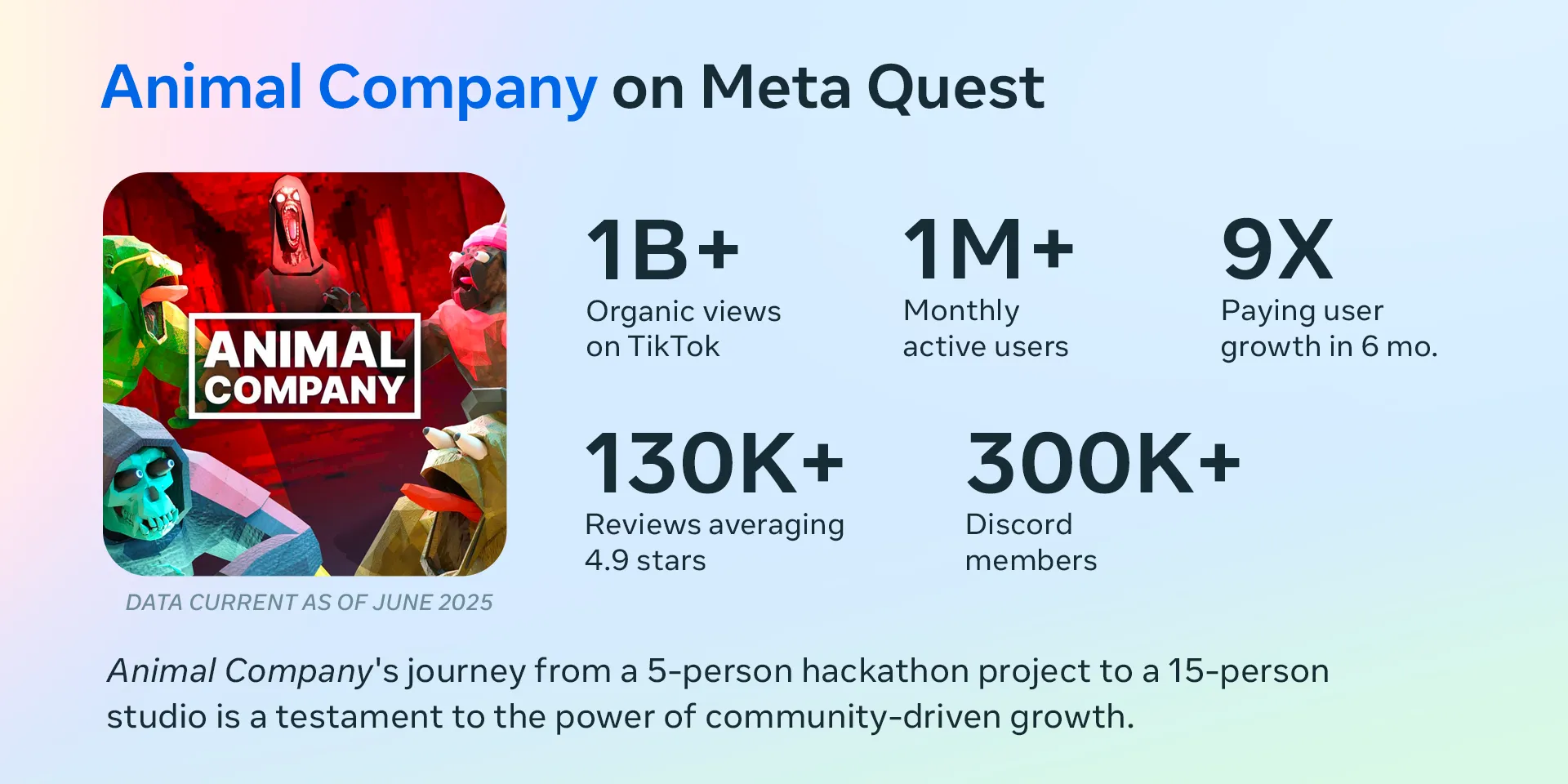
One billion organic views on TikTok. Over one million monthly active users. 9x paying user growth in 6 months. If those numbers sound like the handiwork of a massive AAA studio, think again.
Meet Animal Company, the chaotic, spooky, free-to-play virtual playground from Wooster Games that, as of writing, ranks #5 in gross first year revenue. For the uninitiated, Animal Company takes the arm-flailing locomotive mechanics of Gorilla Tag, mashes it with the co-op tension of Lethal Company, and tops it off with a healthy dose of screams and memes.
In this case study, we’ll crack open the playbook that elevated a six-week hackathon project into a bonafide phenomenon. We’ll go beyond the what and dig into the how — how Wooster Games built insanely shareable experiences, how they cultivated a diehard community, and how they built a new model for success on Meta Quest.
How do you design a game that markets itself?
Before dominating TikTok feeds, Wooster Games, a gaming division of Spatial, spent an entire year experimenting with over 20 different games across web and mobile platforms. While each game was more promising than the next, none achieved the retention and monetization numbers the team was aiming for. They realized that, if they truly wanted to stand out in today’s hyper-competitive web and mobile market, they’d need to completely rethink their approach to game design.
That led to a bold idea, “What if they created a game designed to grow on its own spread organically through word of mouth and social media”
Creating a new playbook for organic growth
But how, exactly, would they make that vision a reality? The team instinctively turned to their experience working with VR, drawing from nearly a decade spent creating virtual meeting platforms and reshaping emerging technologies to be more social. They studied breakout hits like Gorilla Tag and Yeeps where highly engaged audiences kept coming back to play with friends. Time after time, they saw how VR’s unique physicality and immersion could create those “you had to be there” moments that were not only fun to play, but compelling to watch and share on social media.
 We created a "viral design framework" to engineer gameplay that players want to share with friends: social chaos, unpredictable interactions, and those “you had to be there” moments you see on TikTok and YouTube.
Wooster Games
Shareable by design
The viral design framework is Wooster's playbook for engineering a game that’s as fun to watch as it is to play. From the beginning, the team decided to abandon the idea of targeting a broad audience, as they did with previous games, and instead went all-in on younger audiences.
Why younger audiences?
These players do more than consume content. They create it, remix it, and serve it up live on platforms like TikTok and YouTube. The team knew that if their viral playbook was going to resonate with any group, this youth demographic was it. The team didn’t waste any time and dove into an intense six-week hackathon to create a game that would serve this hyper-social, creator-centric audience.
- Foster social connection
Wooster began by building an open-ended social playground for memorable, shared adventures. Whether players are teaming up or playfully trolling one another, the result is always a shareable story. For example, a group's plan to steal valuable loot from a creepy cave might go haywire when a monster emerges from the darkness and hilariously jumpscares a member of the group. To amplify the comedy of these moments even further, the Wooster team added the game’s now-infamous 'jiggly' movement animations and exaggerated facial expressions. - Create impossible challengese
Next, the team focused on empowering players through skill mastery and friendly competition. They designed difficult but rewarding scenarios so that players could showcase their skills with friends. This included environmental puzzles, intense monster encounters like the one above (think: giant spiders) where survival depends on teamwork and wits, and tricky parkour maps that require players to precisely jump and swing through dangerous areas while being chased. - Let the players write the tutorial
Wooster also intentionally launched Animal Company without a formal tutorial. By letting players fend for themselves, the team gambled on letting the community fill the void. The strategy paid off masterfully, with experienced players creating “how-to” YouTube videos that taught new players the ropes. - Prioritize fun over fidelity
With a founding team of just five people, Wooster didn’t have the manpower to compete with the polished visual fidelity of a AAA game. But they did have an insight that could transform this constraint into a killer advantage. The team understood that younger audiences value having fun more than they do sleek visuals. In fact, the occasional jank or glitch actually adds to the comedy and makes experiences all the more unpredictable and authentic. Instead of polishing away the warts, the team leaned into them for maximum comedic effect.
Our youth audiences live on those social media platforms, and that's where we tested our ideas before launch.
We created our own channels, posted videos of the team playing the game, and measured if we could make viral moments ourselves. Once we saw results, we leaned in heavily to film every week and never needed traditional ads.
Tera Nguyen
Director of Product at Wooster Games / Spatial
How do you build an audience without a traditional marketing budget?
Fast forward six weeks, and the Wooster team had a playable version of Animal Company on their hands. But how would they actually get people to play it? Their eureka moment came when they started thinking of their players as co-creators who were waiting to be recruited, rather than consumers to be targeted.
Develop in the open alongside your community
They started on TikTok, where the team posted videos of themselves playing the game before it was even available. These videos served both as a proof of concept and a recruiting tool for Animal Company’s first diehard fans. The strategy worked. Players began spilling into the game’s Discord server directly from TikTok, and what began as just 100 members grew to over 1,000 by the time Wooster launched early access.
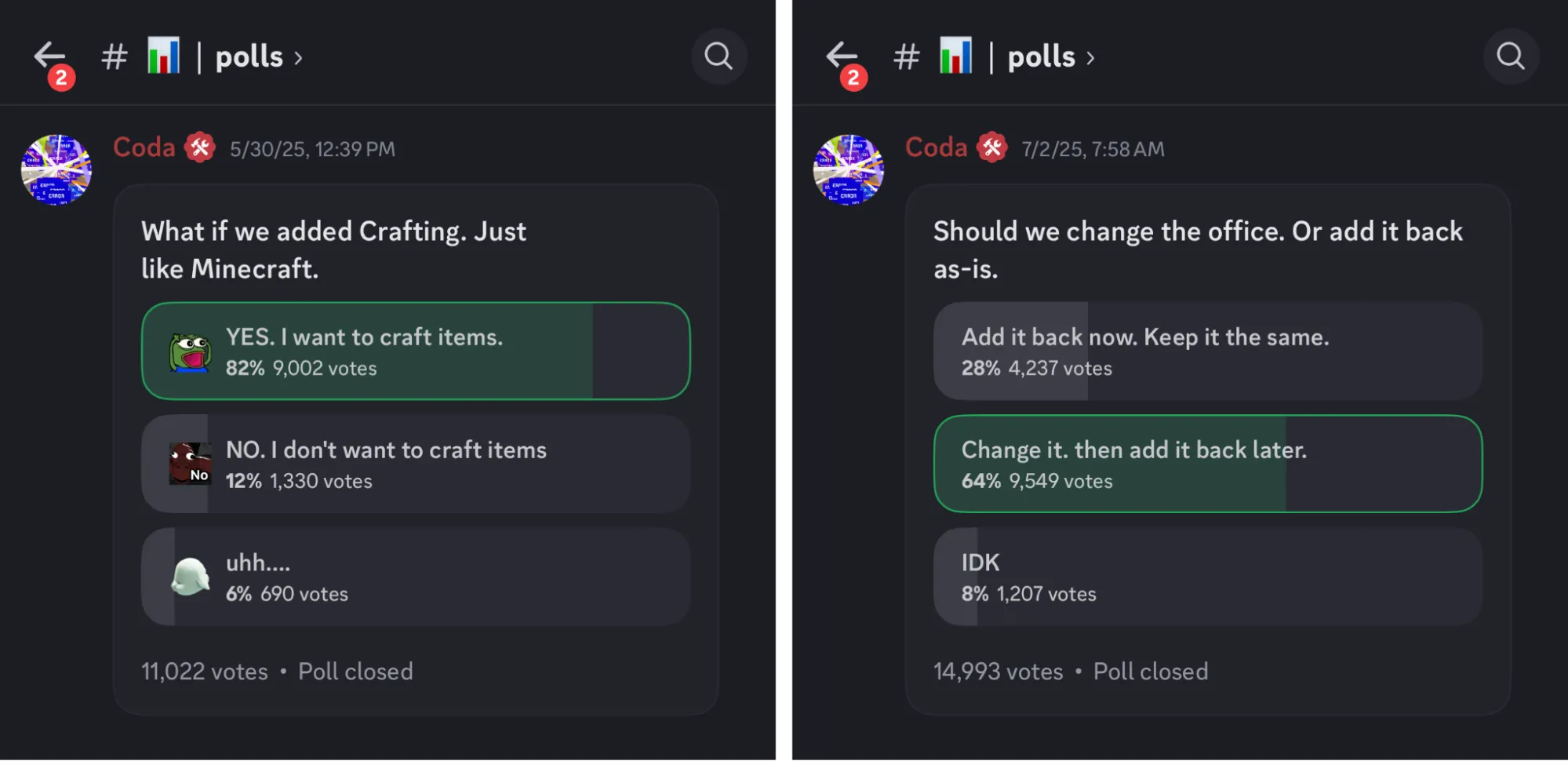
The key was developing in the open, rather than in secrecy. The team leveraged Animal Company’s Discord server to bring the player community directly into the messy, nitty gritty development process. With this direct line of communication between players and devs, diehard fans got a seat at the table, delivering real-time feedback via Q&As, community polls about upcoming features, and creative challenges like fan art and video contests.
All of our communication with the player community is through Discord. We also do fan art and video contests because now everybody is gathering on Discord with a shared, mutual interest in Animal Company. So we tie from social media to Discord to what's happening inside the VR game and that helps us grow.
Wooster Games
The studio also responded to Early Access player feedback by adding character customization options in the full release. This seemingly small addition had a major impact—giving content creators fresh material while boosting revenue, with add-on packs accounting for over 10% of total payments within a month of release.
But the true genius of New Folder Games’ approach was turning their player base into something more valuable than just customers.
Maintain a regular update schedule
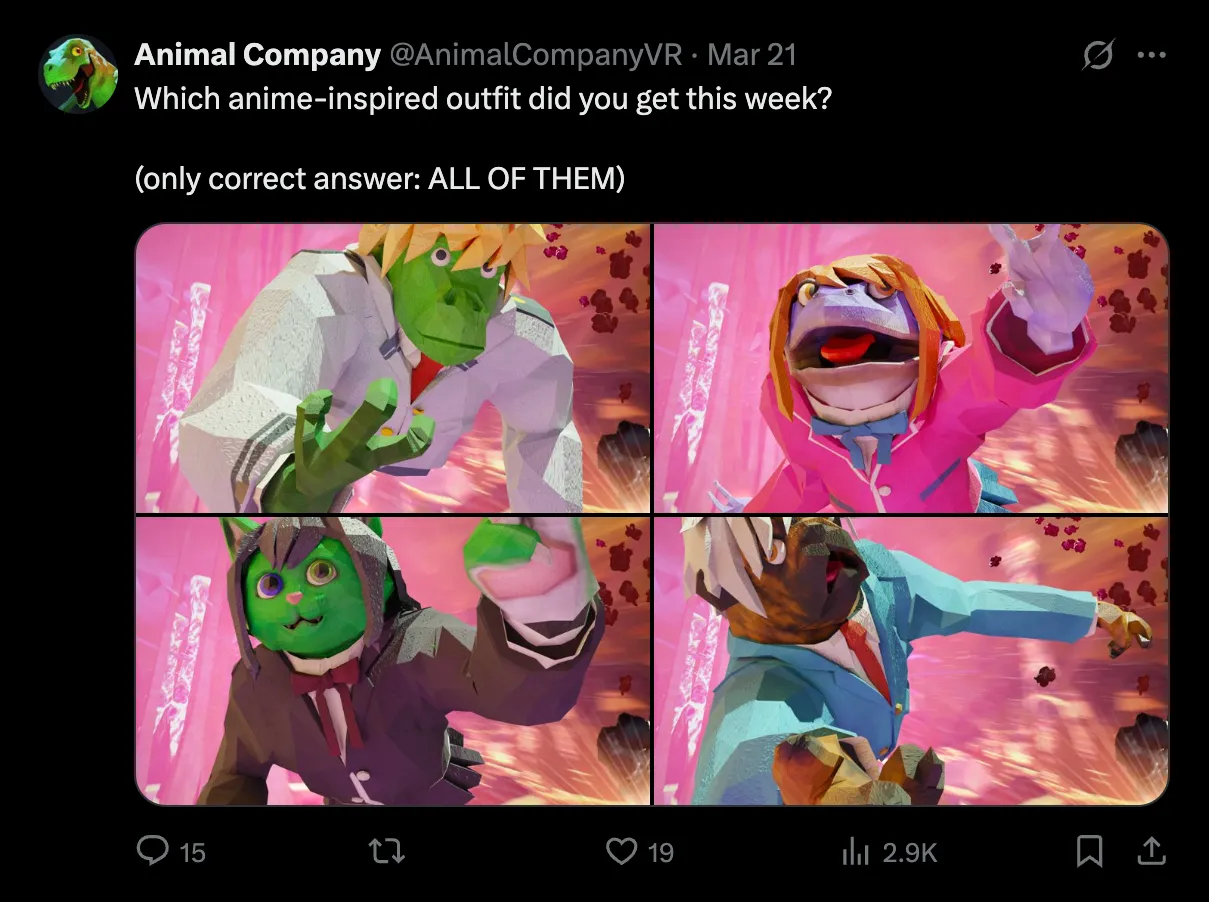
If Discord was the vehicle, then the team’s relentless weekly update schedule was the engine. The Wooster team continues to ship updates every Tuesday as of this writing, and while intense, this allows them to be incredibly reactive to community suggestions. Practically as fast as the team releases a new update, the player community reacts to it, dissects it on social media, and surfaces new ideas for the team to build into future updates.
We ship updates weekly, every Tuesday, and that's a crazy schedule. But one of the great things about that is we get to be super-reactive to the community. So we'll put out some lore, they'll react to it, they'll create threads. It'll give us new ideas and then we'll incorporate that into next week's release.
Waldo Bronchart
VP of Engineering at Wooster Games / Spatial
- Driving product-market fit with quick iteration
The intense weekly cadence drove the team to push and test improvements and experiments quickly. This rapid iteration was essential to nailing Animal Company’s product market fit, as it enabled the team to act on community feedback almost instantly. - Making a habit of hype
Perhaps the most powerful benefit of a weekly content schedule was how it turned updates into a community ritual. Players learned to make a habit of revisiting Animal Company every Tuesday to check out what was new, which helped turn even small updates into community-wide events. - Setting the stage for a creator ecosystem
Wooster’s rapid iteration ultimately became the lifeblood of Animal Company’s creator ecosystem. The constant stream of updates guaranteed that creators always had inspiration for new content. Every new monster, item, and map effectively became a new video idea, thumbnail, and reason to go live. This formed the foundation of their approach to creator partnerships, a strategy best illustrated by their breakthrough collaboration with AwakenToast on YouTube.
Give your creator partners something money can’t buy
With a zero-dollar marketing budget, Wooster Games was forced to think outside the box when it came to content creator partnerships. What could they offer that was more provocative than cold, hard cash? When they first approached AwakenToast, a popular VR YouTuber who was already gaining traction with Animal Company content, their pitch wasn’t about money. It was about a partnership that would provide a constant source of fresh content that could fuel his channel’s growth for months, even years, to come.
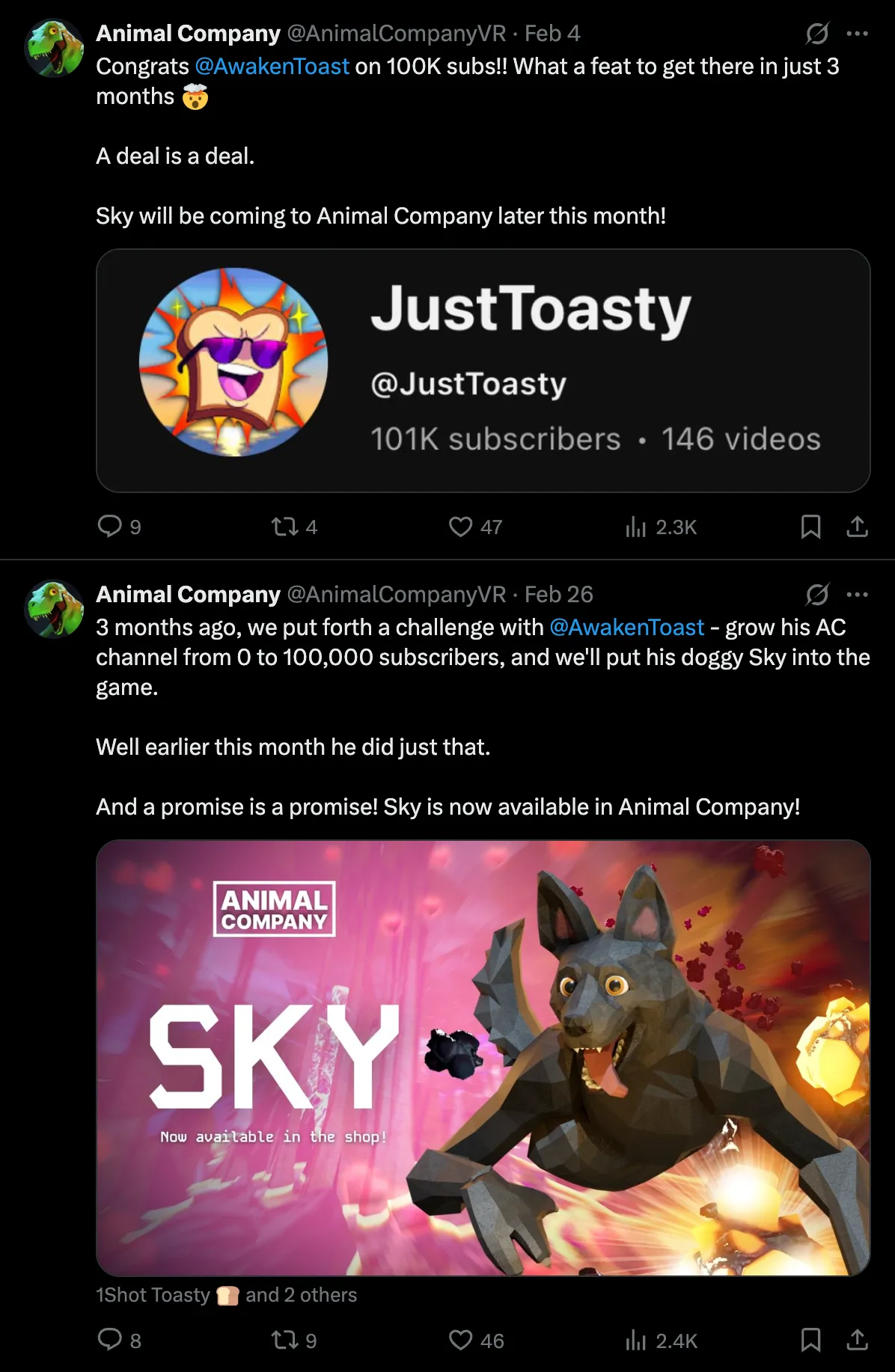
Wooster challenged AwakenToast to go all-in on Animal Company with a dedicated channel. If he grew the channel to 100,000 subscribers, they promised to add his real-life German Shepherd to the game. He agreed, and the rest is history: AwakenToast started the channel under the name JustToasty, hitting 100K subs in just three months. When the dust settled, Sky the German Shepherd was immortalized as an in-game avatar. But more importantly, Wooster Games had shown creators everywhere that they offered something more valuable than money—a foundation for building a successful channel.
To scale this promise, the team launched The Drip Department, Animal Company’s official, invite-only creator program. The program’s biggest perk is bringing new and growing creators together so they can collaborate on videos. Members also receive benefits like exclusive in-game cosmetics and early access to major seasonal content which gives them unique, ‘first-look’ content that attracts viewers.
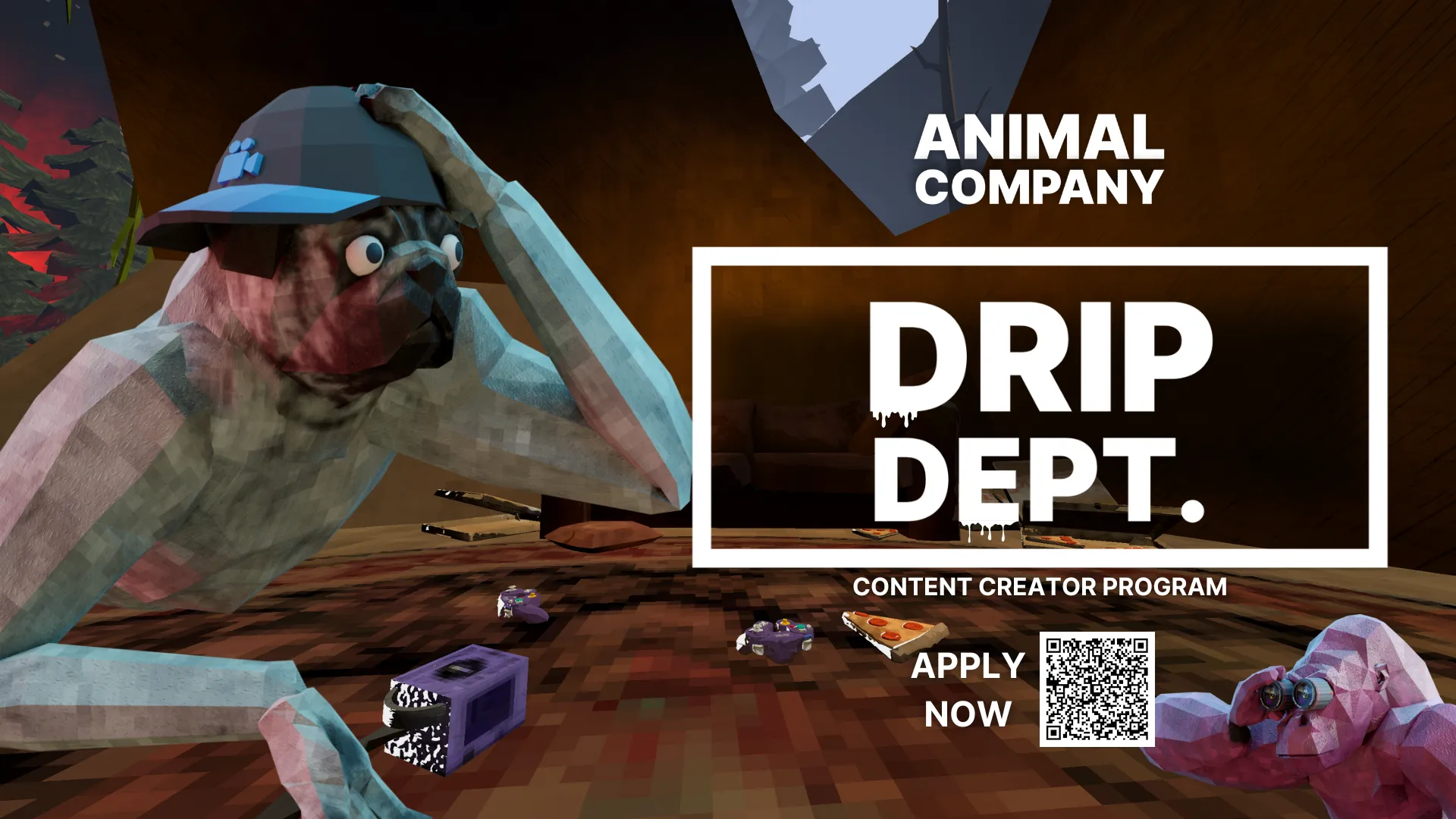
For Wooster Games, the answer to building an audience with a zero-dollar marketing budget boiled down to developing in the open, maintaining a relentless content rhythm, and empowering content creators. To actively equip these creators for success, the Wooster team also provided tools like a downloadable asset kit packed with high-quality art and logos. This simple resource made it easy for any creator to produce professional-looking video thumbnails.
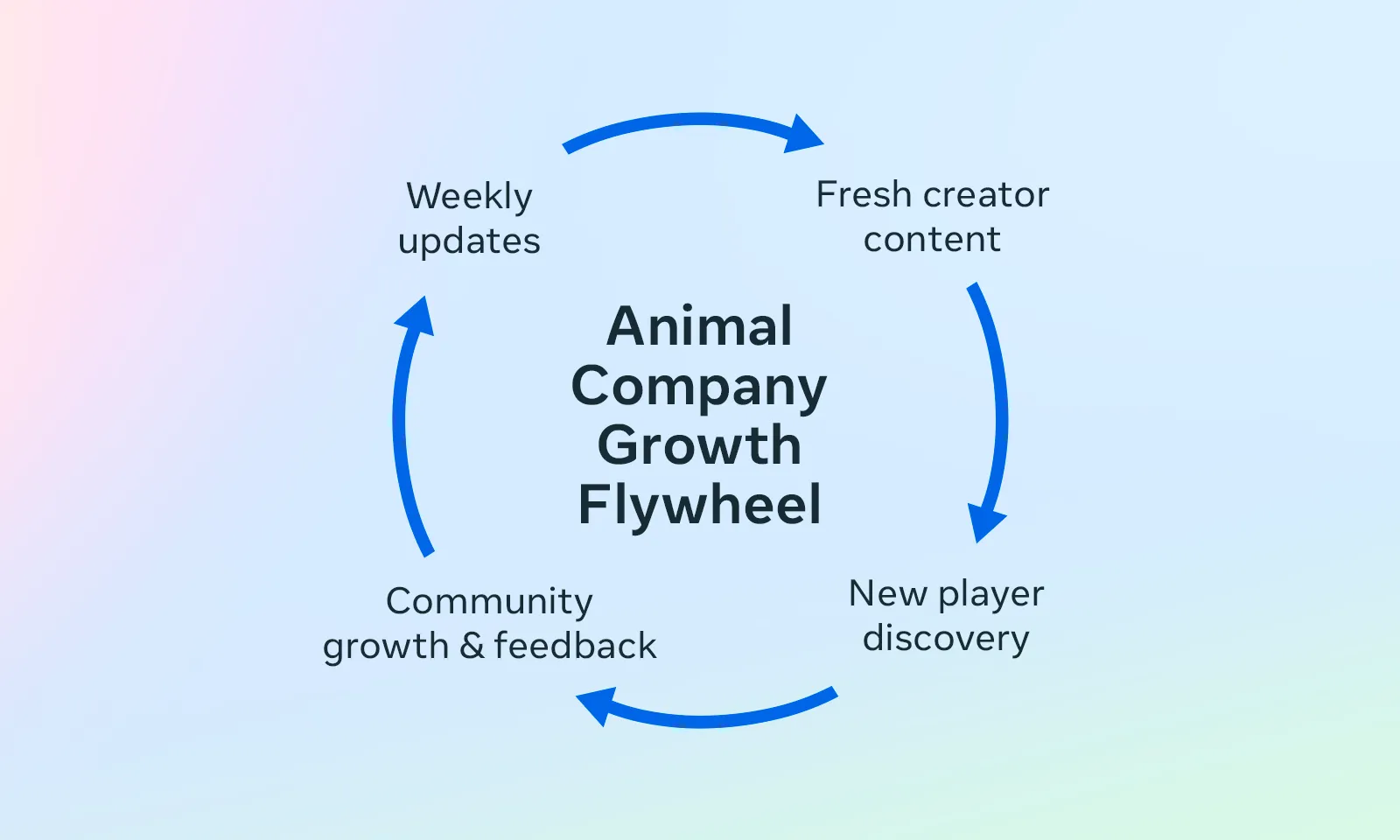
Together, these strategies formed a powerful loop. Engaged Discord members created content on TikTok and YouTube leveraging the official Animal Company creator asset kit. This content brought in new players, who then joined the Discord community. Those new players then created their own content, and kept the flywheel spinning.
The results speak for themselves. As of writing, Animal Company has generated over one billion organic views on TikTok, grown its Discord community to over 300,000 members, and grew paying users by 9x in just six months. But now that Wooster had proven product market fit, the challenge was how and when to monetize it.
When is the right time to monetize?
It’s a classic developer dilemma: monetize too early and you risk alienating the community you worked so hard to build. Faced with this exact challenge, the team at Wooster Games provides a powerful case study in patience. They understood that introducing paid content before the product had proven its staying power could kill their momentum.
Wait for product-market fit
The team waited three months after early access launch to monetize. They need to see clear, undeniable signals of product-market fit before asking players to spend their hard-earned cash. The key signals they looked for were:
- Exceptional long-term retention
Animal Company maintained impressive numbers after early access launch, with 56% day-seven and 45% day-twenty eight retention. - High daily engagement
Between Christmas and March 2025, Daily Active Users more than tripled from 145K to a peak of over 500K. - Soaring playtime
Over the course of six months, daily playtime per user tripled, reaching over 100 minutes last March. - A constant stream of organic content
The non-stop community feedback and user-generated videos on Discord and TikTok were a clear indication of strong product market fit.
The way we thought about monetization for Animal Company was to make a great game. Make a fun game, make a game that people want to come back to, and once you have that loop, you can figure it out.
So really, for the first three months, we didn't have any monetization in the game. And we knew when the game was ready for monetization when players were asking for it.
Waldo Bronchart
VP of Engineering at Wooster Games / Spatial
Test, learn and scale
Once they had proven product-market fit, Wooster began methodically testing their strategy with their 'Company Coins’ in-world currency. They leaned into what they call the "3x Test Rule," meaning they needed to see a result work three times in similar experiments before considering it a reliable pattern. This approach confirmed that timely, content-rich updates were the single biggest driver of revenue.
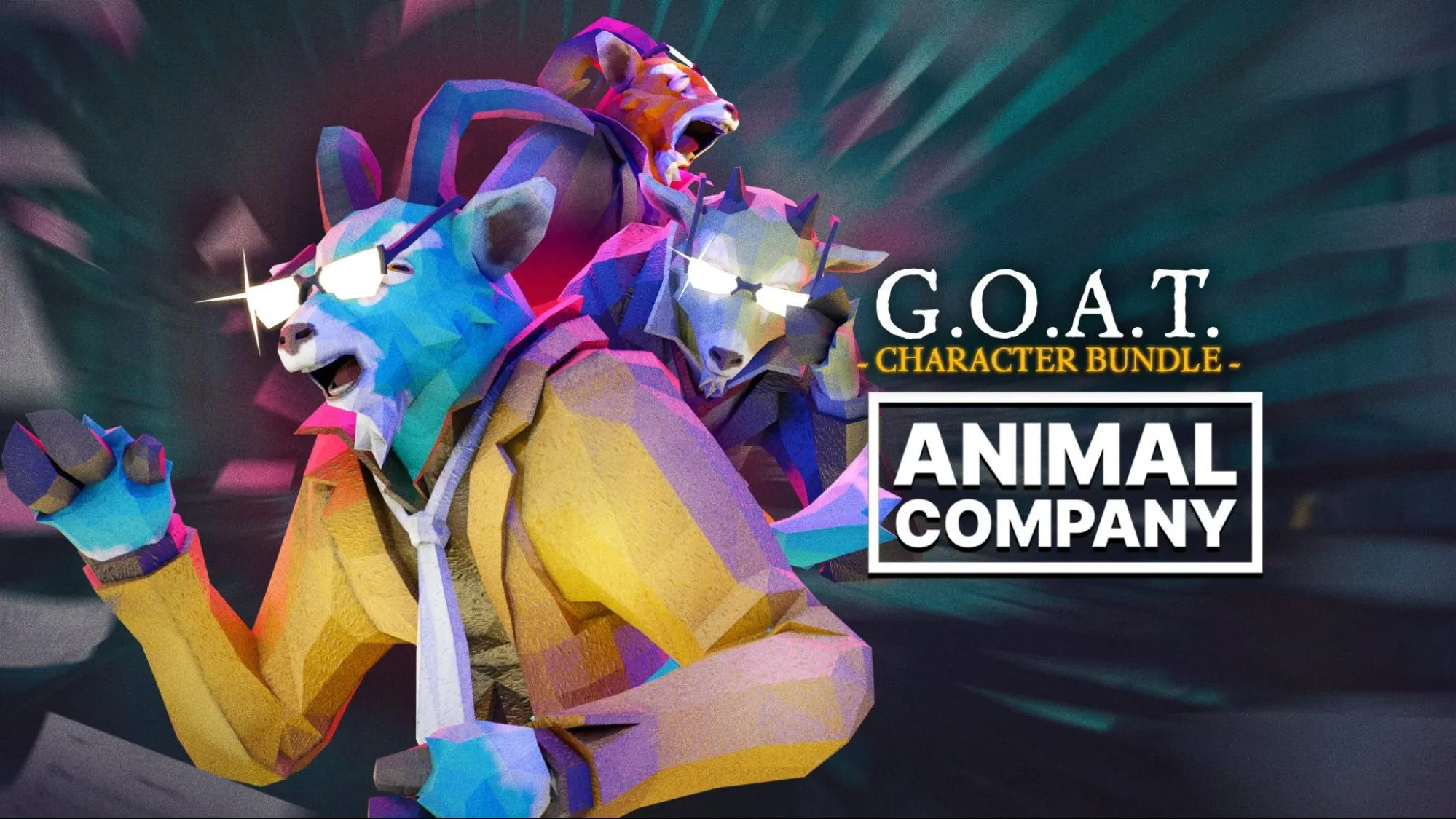
The G.O.A.T. bundle was the ultimate expression of this strategy. Leveraging the 3x Test Rule, the team launched the $29.99 bundle for a limited four-week window alongside a major map and boss update. It worked because it combined scarcity, high visibility, and a validated price point.
This data-driven approach to monetization proved to be incredibly effective at converting engaged players into paying customers. In fact, over six months, while their monthly active users doubled, the number of paying users increased 10x as many - from 2% of active users to over 12%. This successful conversion, combined with a validated pricing strategy, had a massive impact on the bottom line. All told, their efforts resulted in a stunning 10x growth on APRU in the 7 months since October.
Key takeaways
With Animal Company, Wooster Games proved that a new playbook built on community co-creation and shareable moments could outperform a traditional marketing strategy. Their success provides a clear, actionable blueprint for developers looking to build their next hit game.
Here are the essential takeaways you can start deploying today:
- Find your niche and develop in the open
Create experiences that are enjoyable both to play and to watch. Focus on mechanics that generate memorable, shareable moments that players will want to post on social media. - Build shareable moments into your product
Animal Company was engineered to be as fun to watch as it is to play. By creating a social playground that generated unpredictable, shareable moments, they built a product that marketed itself. - Make your community your marketing engine
Instead of ad budgets, Wooster invested time and creativity into their community. By offering real value (like in-game recognition and exclusive items) instead of cash, they built real partnerships with creators who became their most valuable champions. - Monetize with patience and data
Wooster Games waited for proof of product-market fit before introducing paid content. Their "3x Test Rule" ensured that monetization felt fair and was optimized for long-term growth.
Your journey starts here
Animal Company proves that a deep understanding of player motivation, a commitment to community-informed design, and a bold, unconventional approach to growth can lead to chart-topping results. If you’re ready to get started on building your next breakout hit, the Meta Horizon Start program provides the support you need. Accelerate your development with:
- Dedicated support
Receive priority technical support from Meta staff and fellow community developers. - Development resources
Get access to resources like software credits and pre-release products to accelerate your process. - A global community
Join our global community of developers and get invited to exclusive events and opportunities to give Meta feedback.
Take the next step. Learn more and apply to Start today.
TAGS
Success Stories
Animal Company
Experiences
Quest
Design
Apps
Explore more

Virtual reality / Meta Horizon
Support and legal
Virtual reality / Meta Horizon
Support and legal
Virtual reality / Meta Horizon
Support and legal
English (US)
© 2026 Meta